
Blight Is More Than Abandoned Buildings
Blight is often understood as visible neglect, such as boarded windows or deteriorating structures. In reality, blight is frequently the result of legal, financial, and ownership barriers that prevent properties from being repaired, sold, or occupied.
In Wilkinsburg, many vacant or distressed properties are not abandoned by choice, but are instead trapped by systems that make resolution difficult without intervention.
What causes this?
When a property owner passes away without a clear succession plan, the property may become tied up in probate or remain titled to a deceased individual. Without clear ownership, homes cannot be sold, repaired, or financed.
Deceased Owners and Unclear Title
Tax Delinquency and Compounding Penalties
Unpaid property taxes can accumulate interest, penalties, and liens over time. As these costs grow, properties become increasingly difficult to recover, even when there is interest in rehabilitation.
Some properties are owned by individuals or entities that do not live in the community. In these cases, incentives to maintain or reinvest in the property may be limited, contributing to prolonged vacancy or deterioration.
Absentee and Speculative Ownership
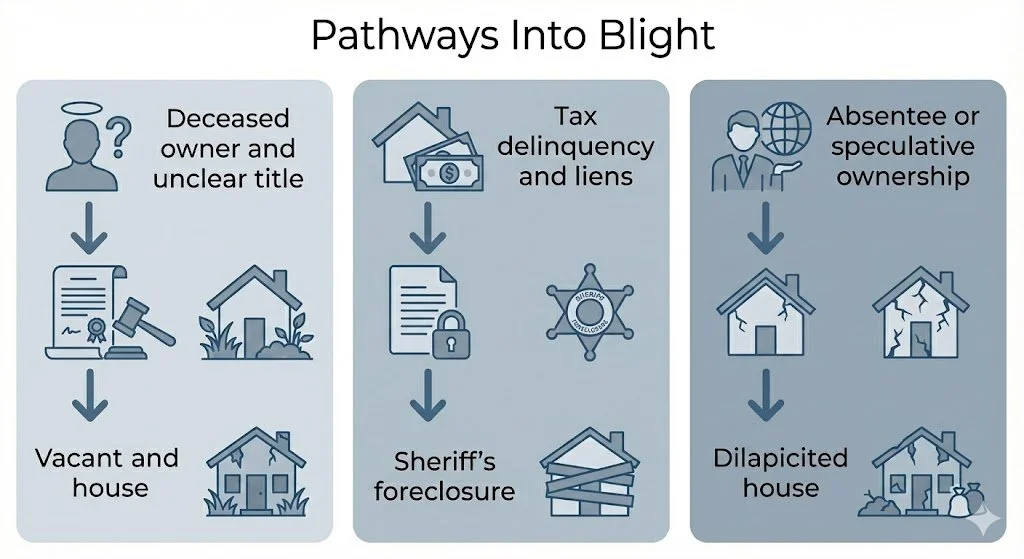
Blight often results from legal and financial barriers, not just physical neglect
Why Blight Persists Without Intervention
Once a property becomes vacant or distressed, legal and financial barriers can prevent resolution for years. Title issues, liens, and court processes often require coordinated action that individual owners or neighbors cannot easily undertake.
Without intervention, these properties may remain stuck, contributing to neighborhood instability and discouraging reinvestment.
The Wilkinsburg Land Bank works to address the underlying barriers that cause blight by clearing title, resolving legal issues, and preparing properties for responsible reuse.
How the Land Bank Helps Break the Cycle
By focusing on these foundational steps, the Land Bank helps return properties to productive use, supporting neighborhood stability and long-term community benefit.